OFURO
THE JAPANESE BATH
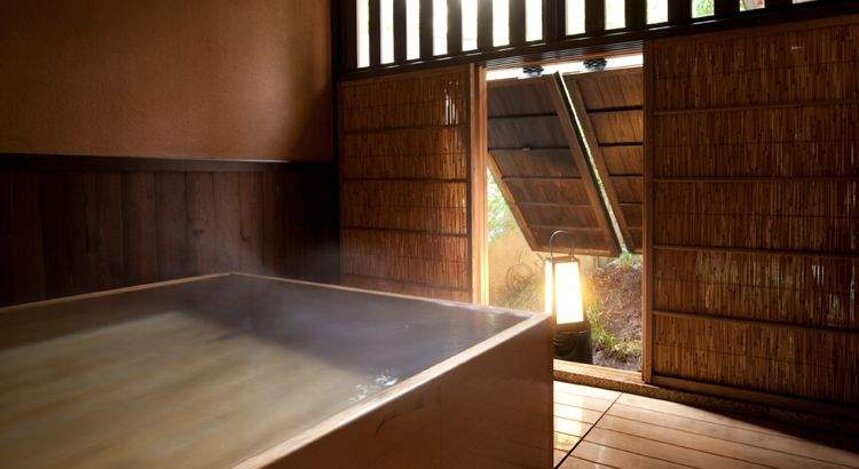
ORIGINAL JAPANESE WOODEN BATHTUBS /
CERAMIC BATHTUBS
LAND OF VOLCANOES, HOT SPRINGS, FORESTS, ZEN SPIRITUALITY
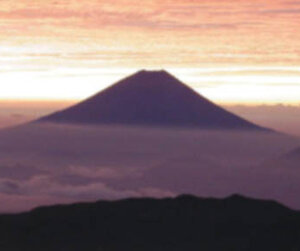
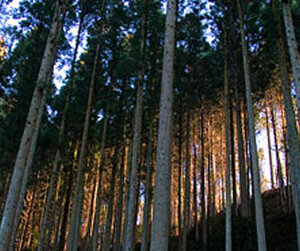
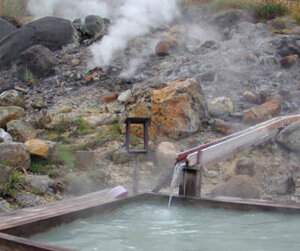
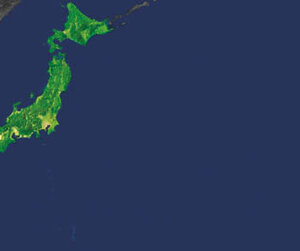
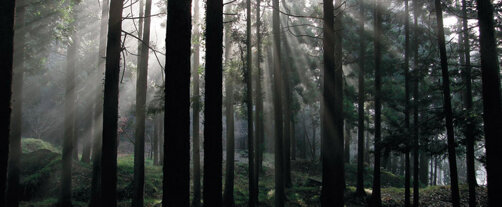
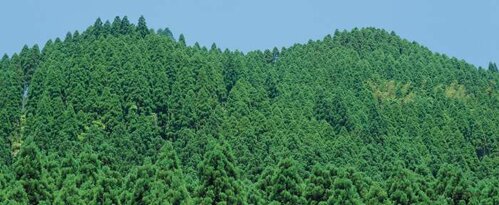
Japan is a volcanic archipelago, dotted with countless hot springs and two-thirds covered in forests. The geographical location and terrain mean that the climate and natural environment fundamentally influence the lives of its inhabitants. The Japanese derive undeniable well-being from their deep-rooted appreciation of traditional values, which contributes to Japan's high life expectancy.
THE HOT WATER TRADITION
The traditional bathing habits of the Japanese are not only practical but also imbued with spiritual and moral principles, which, similar to the tea ceremony, have their origins in Zen Buddhism. The primary purpose, of course, is personal hygiene, to which the average Japanese person is extremely attentive. Thermal or heated water, relatively hot at around 40°C (104°F), is used. Due to the climatic conditions, this ritual is performed very frequently. In the sweltering summer, bathing temporarily overheats the body, providing a beneficial effect through the continuous perspiration. In winter, bathing is a useful way to warm the body deeply.
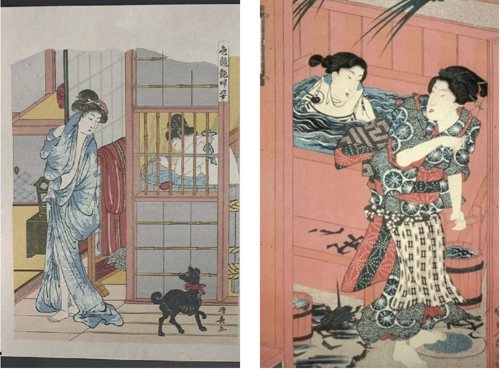
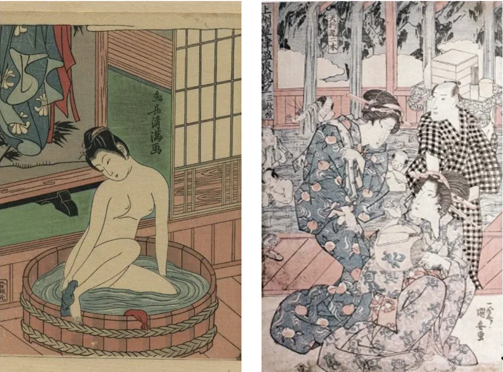
WASH FIRST ... THEN BATHE
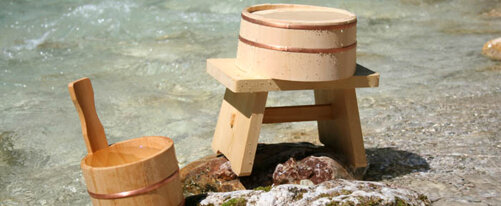
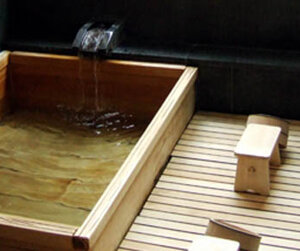
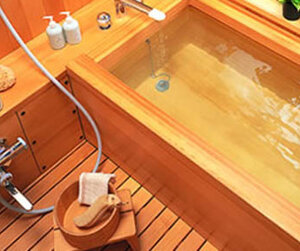
Both at home and in public baths with larger tubs, it is traditional to bathe in the same water. Before entering the bath, each person thoroughly washes their entire body, sitting on a stool and using a bucket, bowl, or shower to draw warm water. This prevents the bathwater from being contaminated and allows the bather to acclimate to the temperature. Japanese people typically bathe naked, covering themselves only with a small towel.
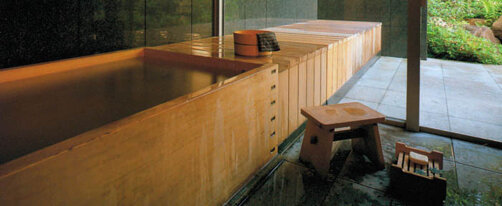
IMMERSE & RELAX
Japanese bathing culture is based on the beneficial effects and comfort experienced by immersing the body in very warm water. This effect is considered ideal when the comforting warmth of the water is combined with circumstances that provide a full sensory experience: the touch of natural materials, the scent of fragrant essences, the beauty of Japanese woods with their light, rich grain, the steam, fragrance, and color of the water, a panoramic view or the prospect of a stylish garden—all this in harmonious tranquility, perhaps interrupted by the gentle murmur of a small waterfall or refreshed by a light breeze. Similar to the tea ceremony, the ritual of Japanese bathing also adheres to the four principles of wa-kei-sei-jaku: harmony, reverence, purity, and stillness.
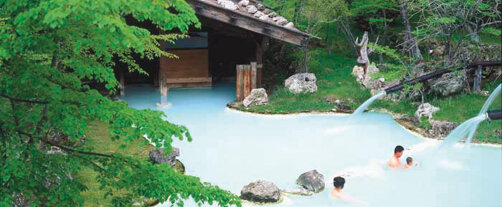
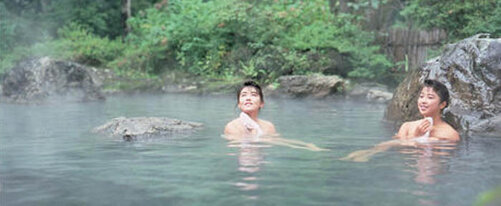
VARIOUS BATHING PLACES OFURO - SENTŌ - ONSEN - ROTEMBURO
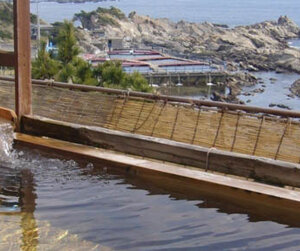
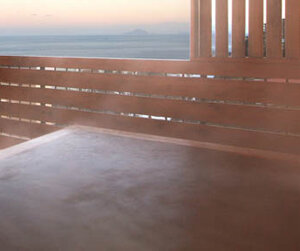
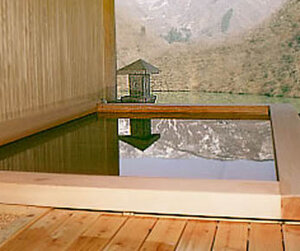
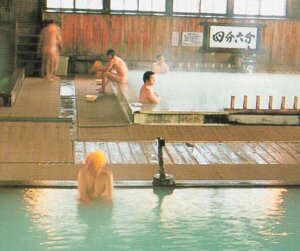
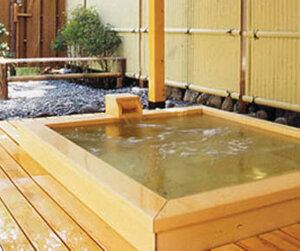
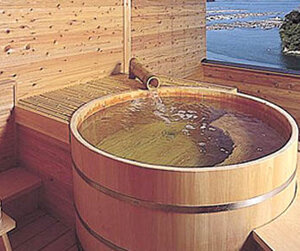
Depending on the occasion and local conditions, there are various ways to experience the Japanese bathing ritual: ofuro refers to bathing in general (at home), sentó denotes public baths, onsen are thermal baths, and rotemburo is bathing in the open air, often characterized by idyllic landscapes surrounded by nature.
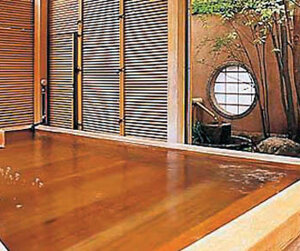
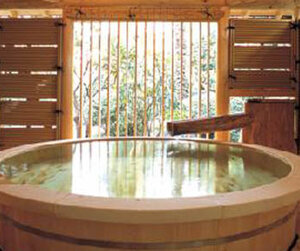
BENEFICIAL EFFECTS OF BATHING
When bathing, especially when done in the "Japanese style" - by means of thorough body cleansing and subsequent immersion for relaxation - the body is subjected to five basic activities, which we are often only insufficiently aware of, but which are described in detail in Japanese specialist literature.
The warmth promotes perspiration and the corresponding opening and cleansing of the pores, regulates body temperature, controls both the sympathetic and parasympathetic nervous systems, and normalizes heart activity, either activating or calming depending on the water temperature.
The water pressure is not usually perceived when entering the bath. However, with heightened awareness, especially when immersing oneself in the bath up to shoulder height while seated, one can notice a certain compression on the chest, which reduces the chest circumference by a few centimeters. This activates respiration, the lymphatic system, and blood circulation.
According to Archimedes' principle, buoyancy force reduces body weight in water by up to one-tenth. This creates a feeling of lightness and freedom. The water also has a certain viscosity that resists muscle movement.
Chemical substances such as those found in thermal springs trigger special reactions in the body. Thermal springs are named as such according to the oligo-mineral substances they contain, which are not found in ordinary spring or tap water. In Japan, countless treatises exist on the comprehensive topic of thermal springs and their effects on the human body, considering the types of ingredients, their concentrations, the interrelationships, and experiences with a multitude of very special onsen (hot springs) with unique water qualities.
It is the totality of physical and chemical influences, as well as the way one bathes, that determines the body's well-being. Body temperature, blood pressure, and hormone production are regulated by daily rhythms and are frequently thrown out of balance in today's stressful and hectic lives, losing their natural rhythm. Bathing in warm water, with its static pressure and buoyancy, as well as additional substances, stimulates the body in various ways, restoring the disrupted rhythm to its original equilibrium. People don't go to Japanese spas "to cure an illness" but rather to "stimulate the body's own self-healing powers."
A change of scenery, for example, during a vacation or an "escape" into nature, creates a calming and soothing effect on our bodies even before the physical and healing effects (positive psychological effects) take hold. An environment like that found in the mountains or by the sea evokes particular sensations in the body: changes in temperature, air pressure, and thus oxygen levels stimulate pulse, respiration, and metabolism.
RYOKAN - JAPANESE WELLNESS SPA
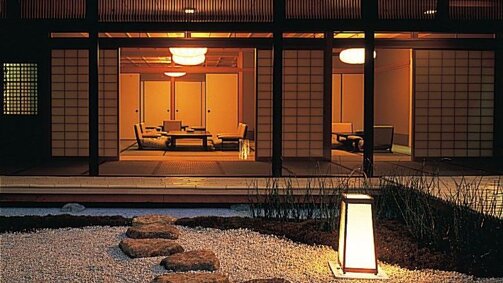
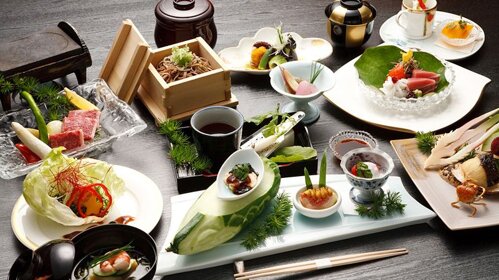
A traditional, typically Japanese way to enjoy a short restorative break is by staying in a ryokan or onsen-ryokan, characteristic Japanese-style spa inns furnished with tatami mats, shoji screens, and futon beds. Here, the refined bathing culture blends seamlessly with the culinary delights of healthy Japanese cuisine—a truly idyllic setting to relax mind and body. The culture of washoku, as traditional Japanese cuisine is known, is expressed to the highest degree in these establishments, both in terms of the ingredients used and their preparation, as well as the aesthetic presentation of the dishes, including the original tableware made of porcelain, lacquerware, wood, and other materials. Washoku was declared an Intangible Cultural Heritage of Humanity by UNESCO in 2013.

... to introduce people who are sensitive to the authentic and genuine refinements of my homeland,
so that they can better understand and enjoy traditional Japan ... >>> Tomoko Mori